The general rule and the narrower new duty
The original analysis questioned how written continuing applications connect to identification submission. Its packet omitted full sections 6.86 and 6.87. Reading that surrounding law changes how the concern should be explained.
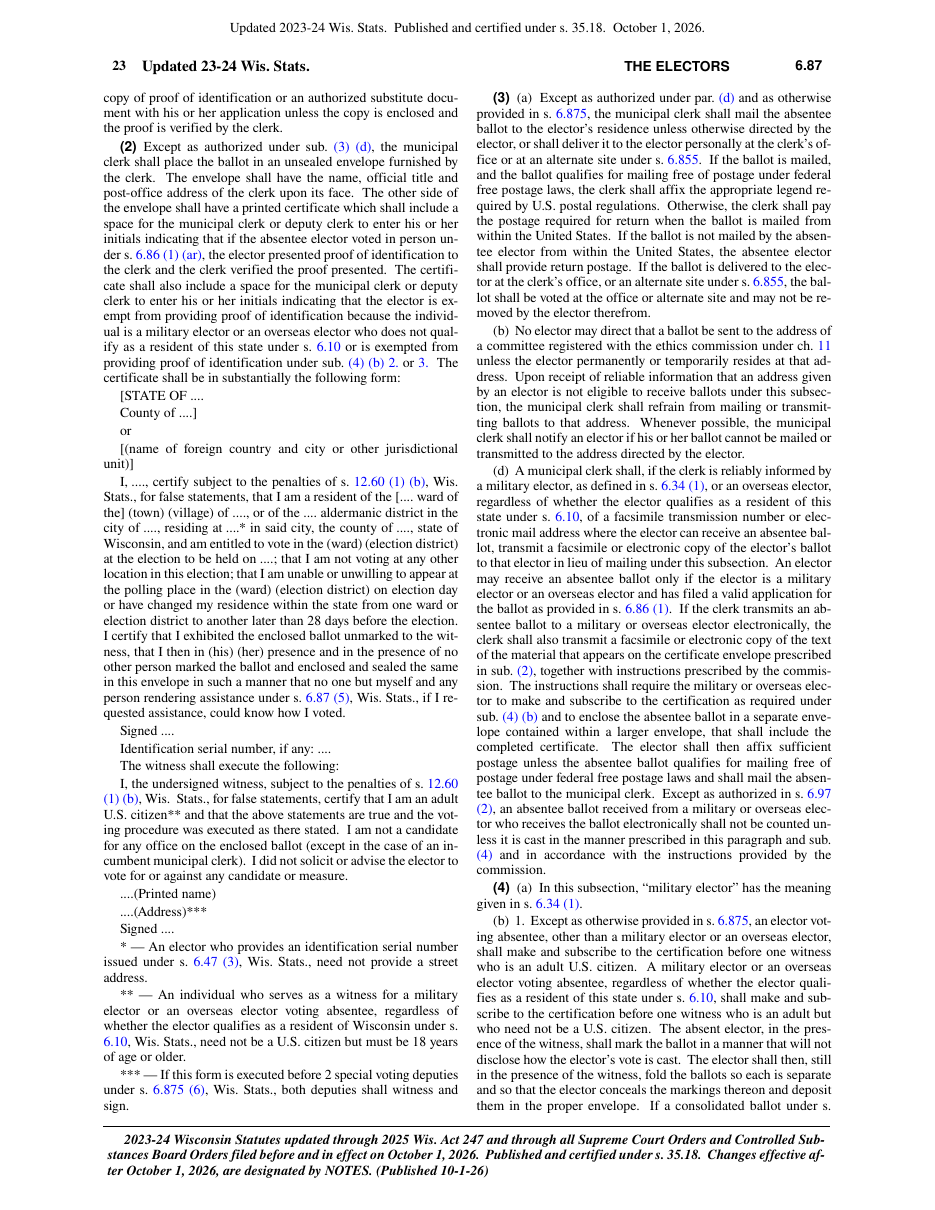
- General application rule at introduction: section 6.87(1) required identification with an absentee application, subject to its statutory exceptions and authorized alternatives.
- Fax/email pathway: section 6.86(1)(ac) addresses applications made through those channels and contains its own identification references and exceptions.
- Proposed retention and expiry notice: SB597 section 5 creates section 6.86(1)(ad)1, which refers to identification received “under par. (ac)” from an elector requesting continuing delivery. Its stated electronic-retention and expiry-notice duties have that scope.
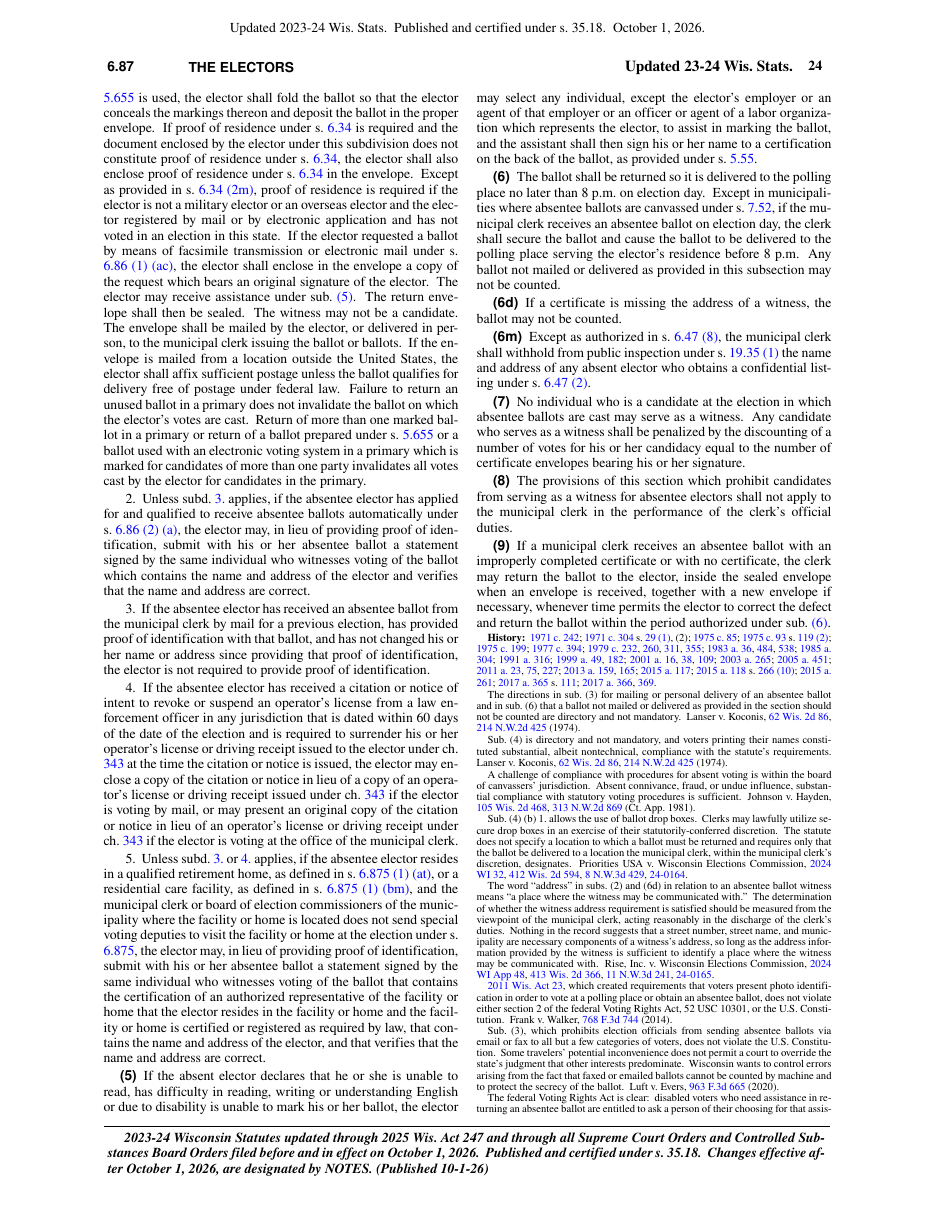
- Existing alternatives remain relevant: section 6.87(4)(b)3 addresses previously supplied identification with no name or address change; section 6.875(6) provides special voting-deputy procedures. The bill proposes repealing the separate indefinitely confined exception in section 6.87(4)(b)2 in 2029.
The source review therefore does not describe written applications as lacking a general ID rule. It does not add a universal resubmission requirement or expand the proposed retention duty beyond its wording. A future sponsor wanting broader duties would need to state that policy choice in a new draft. The three R3 readings found no drafting contradiction on the supplied context; they do not settle every possible application or establish legislative intent.
Inspect the source pages
The chapter PDFs were retrieved from Wisconsin’s official site on October 19, 2026. These saved excerpts come from the historical chapter 6 PDF; use the complete text to examine surrounding qualifications.
Section 6.87(1) begins near the bottom of page 22
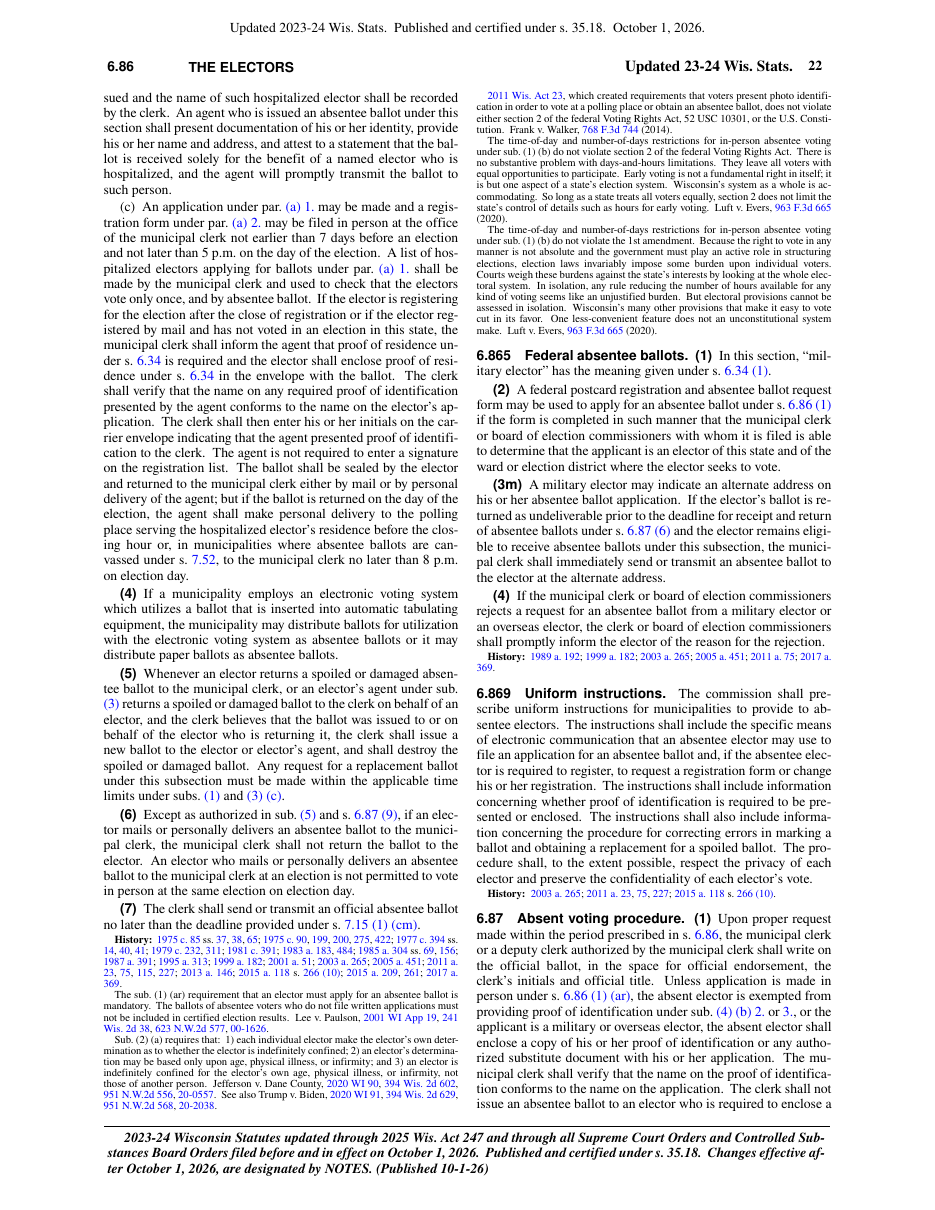
Section 6.87(1) continues at the top of page 23
Section 6.87(4)(b)3: previously supplied identification
Why the context is historical
The packet is anchored to the bill’s October 30, 2025 introduction. Operative election provisions were compared between official 2023 and current PDFs. Section 5.02 reflects the pre-introduction effective-date change in 2025 Act 7. Sections 12.13 and 12.60 exclude the later additions from Act 43, enacted October 31, 2025. The caregiver comparison and supplied text are limited to section 50.065(1)(ag); the review does not claim that all of section 50.065 was unchanged. Case annotations after statutory history are excluded from the operative baseline.
The expanded packet contains 12 supplied citations covering all parsed amendment targets, with no budget omissions. This is a defined source scope, not a claim to exhaust all applicable law or factual evidence.
Section 8: a distinct draft correction
The historical first revision added a comma in place of “or” between the military and overseas references. It was outside the specified repair sites. R3 restores the original conjunction and changes no other R2 wording. R1, R2 and their raw readings remain intact. The new R3 result comes from its own three consecutive readings, not from transferring R2’s result.
Read corrected R3 → · See all three new readings →
What is prepared for publication review
The five report editions now explain the source clarification, the restored conjunction and the separate R3 validation. Original finding rows remain unchanged, with their limited source context identified before the table. The official introduced PDF was retrieved again and matched the saved bytes; refreshed history confirms failure on March 23, 2026. This public example links the source review, original findings and separate R3 result.